

or Send us an enquiry below:
Surgery is almost always necessary to cure an anal fistula.
The most straightforward fistula surgery is lay open fistulotomy. This entails cutting a small portion of
the anal sphincter muscle to open up the entire tunnel, which will then heal from inwards to outwards.
For the deeper tracts, cutting open the muscle is not suitable as this would likely lead to incontinence.
Some methods of treatment would include
Although fistula surgery is usually relatively straightforward, the potential for complication exists, and is preferably performed by a colorectal surgeon for colon and rectal surgery. This operation needs to be done with care, as cutting too much muscle will lead to loss of control of bowel movement. Most of the time, fistula surgery can be performed on an outpatient basis – or with a short hospital stay.

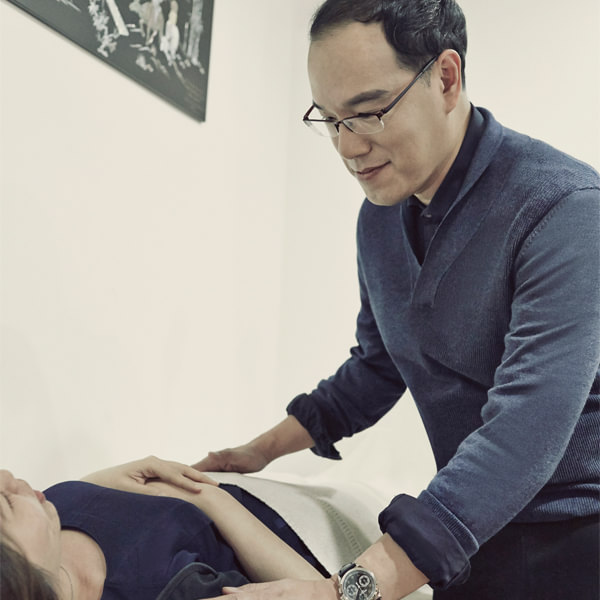
Dr Ho Kok Sun is a respected colorectal surgeon with extensive experience in the diagnosis and treatment of
anal fistulas.
Dr Ho finished his Bachelor and Master of Medicine in Surgery from National University of Singapore. He
became a fellow of the Royal College of Surgeons of Edinburgh in the same year. After completing his
training in general surgery, he went to Cleveland Clinic Florida in 2002 for his fellowship and has been
subspecializing in colorectal surgery since he completed his training.
Dr Ho is currently assistant master of the Academy of Medicine Singapore, the professional institute for specialists in Singapore. He previously served as President of College of Surgeons Singapore, President of the ASEAN Society of Colorectal Surgeons and President of the Society of Colorectal Surgeons (Singapore). He was also vice president of the Singapore-China Association for the Advancement of Science and Technology. He is a founding member of the Eurasian Colorectal Technologies Association. He has served as Organizing Chairman of 2 major international colorectal conferences.

We understand that you may be concerned with symptoms you are experiencing such as pain, bleeding, itching or difficulty in passing stool. It will therefore be useful if you may prepare a list of questions and share candidly with your surgeon during the appointment to make the most out of it.
Your visit with the colorectal surgeon should be a pleasant experience and will begin much as a typical visit to your family physician. Effective communication is critical to patient care and a good colorectal surgeon will take time to listen and to explain the right treatment plan specific for the patient needs.
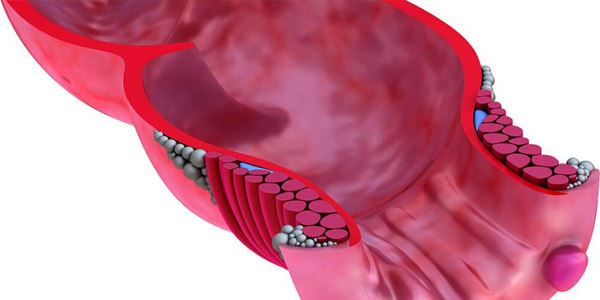 A fistula is an abnormal connection between two body surfaces. An anal fistula is an abnormal
connection between either the anal canal (the inside of the anus) or rectum, with the skin around the
anus.
A fistula is an abnormal connection between two body surfaces. An anal fistula is an abnormal
connection between either the anal canal (the inside of the anus) or rectum, with the skin around the
anus.
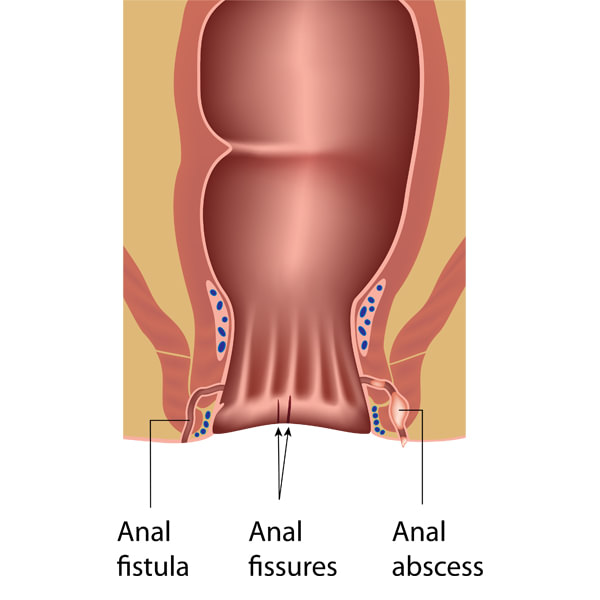
An anal fistula is an abnormal connection or tract between the anal canal (the inside of the anus) to
the skin around the anus.
Anal fistula usually occurs as a result of a previous perianal abscess.
An anal fistula, almost always the result of a previous abscess, is a small tunnel connecting the anal
gland from which the abscess arose to the skin of the buttocks outside the anus.
An anal fistula usually starts because a gland in the anus becomes blocked and infected. Instead of
the infection breaking through back into the anus, it breaks through to the skin next to the anus and
thus creates a tunnel. As long as the internal opening does not close up, the fistula usually do not
heal.
An anal fistula may also follow after an abscess that has been drained. This could be that at the time
of the abscess, there was already an opening to the inside of the anal canal from the abscess but was
not evident at the time of surgery for the drainage of the abscess. This manifests itself as
persistent draining of pus from the wound of the incision and drainage, and that the wound would not
close completely.
Most of the time, a history of repeated swelling and discharge can point towards the diagnosis of the
abscess, and examination of the area may even reveal the presence of the tract that leads from the
skin into the anus.
For some complex fistula, additional imaging such as endoanal ultrasound (by putting a small
ultrasound probe into the anus) or magnetic resonance imaging (MRI) may be required to see the entire
length of the fistula tract.
Most patients can be discharged the same or next day after surgery. Discomfort after surgery can be
mild to moderate for the first week and can controlled with pain pills.
The follow up care for each type of surgery differs. Lay open fistulotomy requires may require daily
wound cleaning at the clinic. After care for VAAFT and LIFT tends to be easier with just daily washing
or flushing of the wound with a syringe.
For fibrin glue and fistula plug, minimal wound care is required.
If properly healed, the problem will usually not return. However, it is important to follow the directions of your doctor to prevent recurrence.
Our first consultation starts from $150. Should a procedure be required, financial counselling will be offered by our staff including your insurance coverage.
We want to see you on time so we strongly advise that you make an appointment with our staff. A time will be allocated with our colorectal surgeon to meet you. Please call or email us for an appointment.
or Send us an enquiry below:
3 Mount Elizabeth,
Mount Elizabeth Medical Centre #04-08,
Singapore 228510
Tel: (+65) 6737 2778
Fax: (+65) 6737 2389
Email: hokoksuncolorectal@gmail.com
Mon - Fri: 9am - 1pm, 2pm - 5pm
Sat: 9am - 1pm
Closed: Sunday, Public Holiday
We are conveniently located at #04-08 Mount Elizabeth Medical Centre, 3 Mount Elizabeth, Singapore 228510. Location is in the
heart of Singapore’s premier shopping district.
If you require further directions to our office please call us at (+65) 6737
2778.